

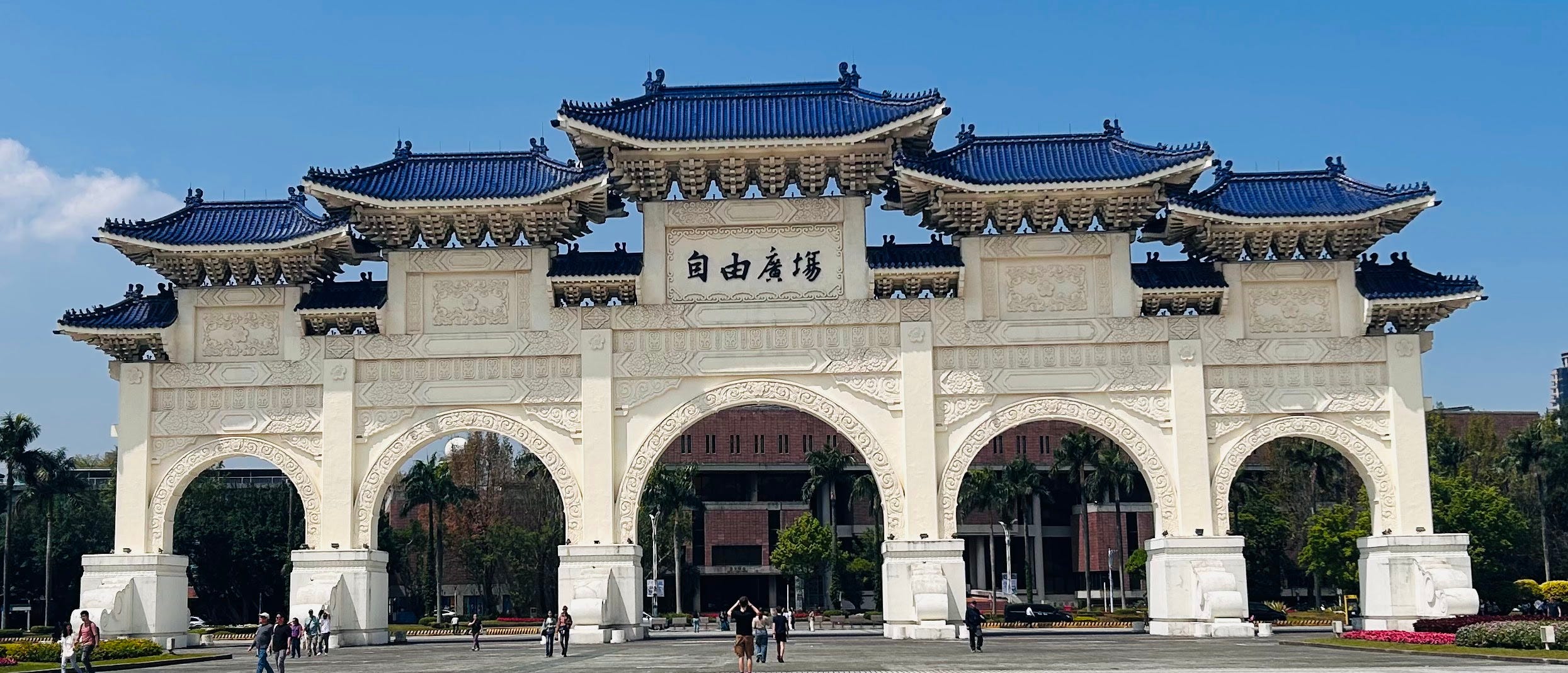
In November 2000, a very young, very timid version of me stood on the grounds of the Chiang Kai-Shek Memorial in Taipei, looking up at one of Asia’s most beautiful landmarks. I was 22 years old, and doing my best to conceal the fear coursing through me as I wondered if my hasty, not-entirely-sober decision to move to the other side of the world was a terrible mistake.
Little did I know it would be one of the best decisions I ever made.
It didn’t take long to understand this in a superficial way. The warmth of the Taiwanese people. The food. Riding my scooter into the lush green mountains. An instant circle of expat friends. I slipped quickly into the rhythm of life in southern Taiwan.
But it would take decades — and the vantage point of a career immersed in the scandal of gender medicine — to understand just how lucky I was to spend my emerging adulthood here. Those crucial final years of brain and identity development.
Now, driving down my old streets, I feel echoes of my younger self. Her uncertainty. Her insecurities. The slow, incremental way she edged toward adulthood.
In her famous essay On Going Home, Joan Didion described the exhaustion of “meeting one’s past at every turn, around every corner.” For me, returning to Taiwan is the opposite. Surrounded by constant reminders of who I used to be, I feel energised — constantly reminded of the fears I conquered, the ground I’ve covered, and how deeply I’ve changed.
But while I’m invigorated on a personal level, I’m also deeply saddened. The young people I’ve devoted my career to helping are always on my mind — innocent youth who are being robbed of so many future possibilities, emerging into adulthood in an era that has forgotten how to let the young simply be young.
Three Versions of Me
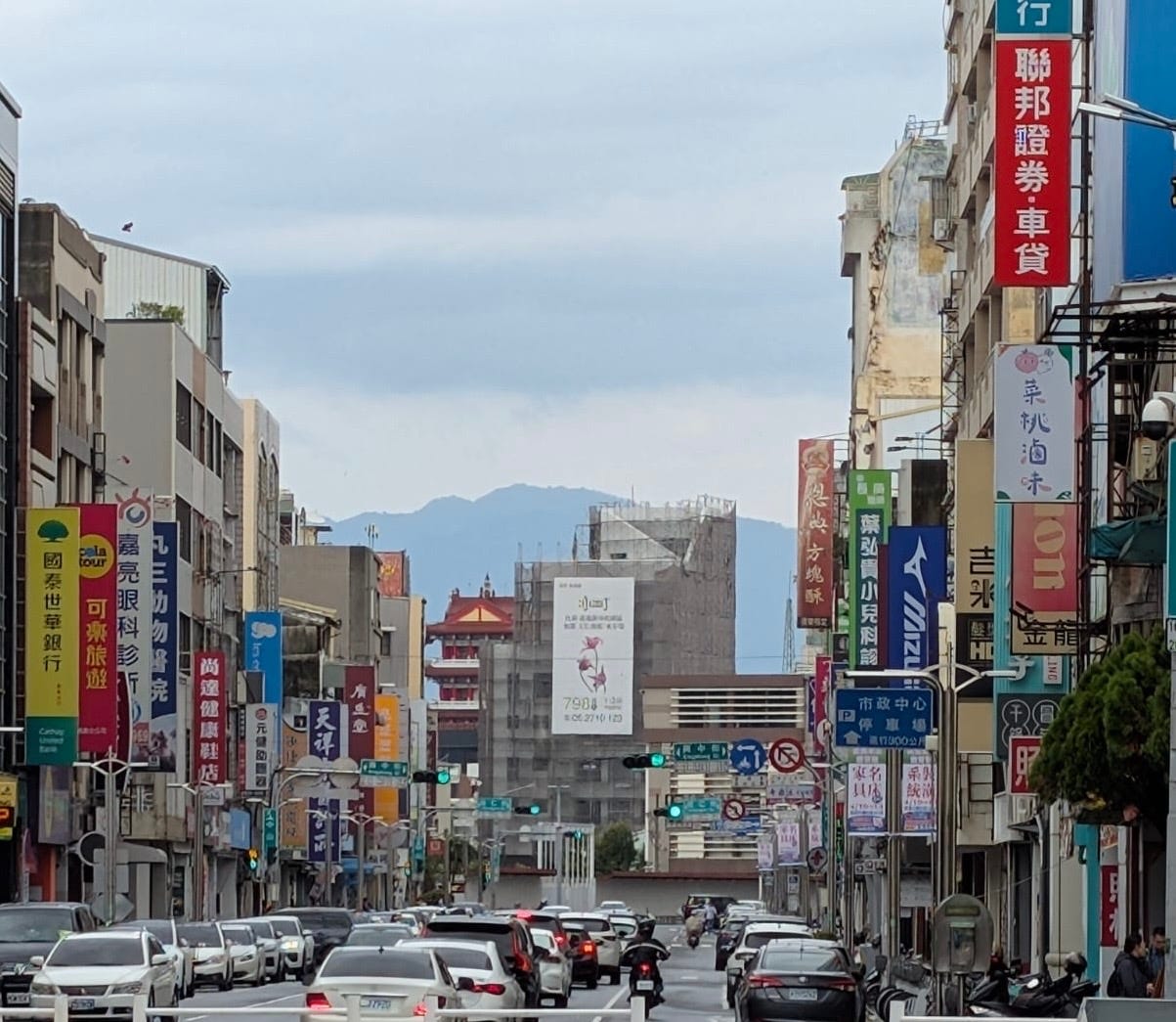
Three completely different versions of me have now walked these colourful streets.
The first, fresh out of university when she stepped off that plane in Taoyuan, was immature, uncertain, and entirely focused on the present. Her weekends revolved around drinking and partying, singing (badly) at the karaoke, dancing in pagodas while the sun rose over the mountains.
With those hedonistic priorities, it’s hardly surprising that she was certain she would never want children. Pregnancy, childbirth, breastfeeding, parenting — these were all alien concepts to her. How could any woman want that?
But something shifted towards the end of that first stretch. I even remember it distinctly. Without knowing anything about the neuroscience that shows the brain reaching completion in the mid-20s, I felt it happen. At 25, almost overnight, I realised I had my whole life ahead of me — that my health mattered, and that weekends lost to partying and recovering were a waste.
I may have been born and raised in England, but Taiwan is where I grew up.
After a couple of years of travelling, a second version of me returned at age 27. More mature, but still adamant that being a mother was not for her, she settled into a calmer, quieter life in Chiayi.
Then, at 30, baby fever hit, and it was as if I was suddenly possessed.
In an instant, the paths my younger self found unfathomable — marriage, motherhood — became the centre of everything.
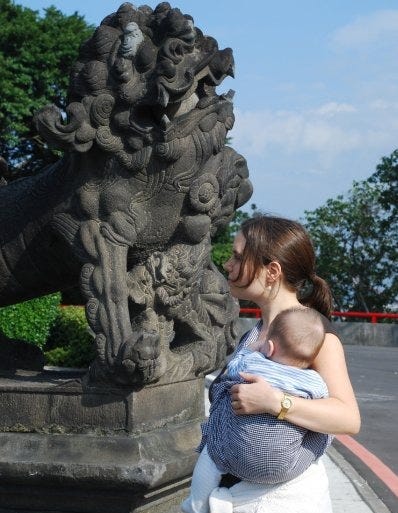
And so began a new and exciting, yet scary, chapter during which I walked those same familiar streets — first carrying that precious new life inside me, then nervously traversing the city with my tiny son strapped snuggly to my chest in a ring sling.
And now, the third version. In my late forties, I landed in Taiwan with my husband and three exhausted adolescents — the entourage my earlier self never could have imagined wanting.
Standing once more at the foot of that beautiful blue and white monument, I found myself thinking about that 22-year-old. What would she make of the woman I’ve become? Someone who now travels the world speaking on one of the most contentious issues of our time. That career path would have seemed even more unimaginable to the timid version of me — so afraid of being disliked — than motherhood itself. She simply wouldn’t have believed it possible.
Which is why keeping futures open matters so profoundly. It allows young people the time and space to transform in ways they never expected, to stumble upon opportunities they couldn’t have imagined, and to try out paths that would never have occurred to their younger selves.
The Stepping Stone
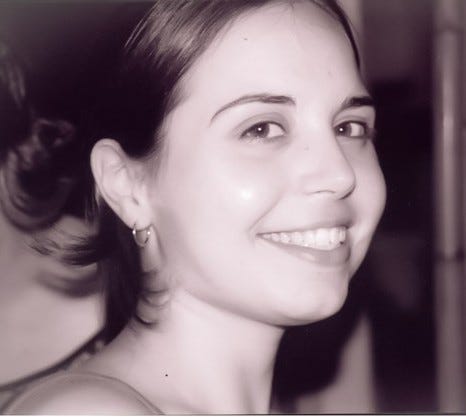
At 22, I was deeply unsure of myself. Socially awkward. Often anxious. Uncomfortable in my own body. In today’s culture, trans is one possible explanation for those feelings, but thankfully, back then, it wasn’t on offer.
Trans wasn’t yet a way to be a person.
Nor did I even suffer from body dysmorphic disorder or social anxiety. Because we didn’t give every normal challenge of growing up a psychiatric label in those days. Instead, I just thought I was fat. I thought I was ugly. I genuinely didn’t understand why men found me attractive. I didn’t understand why anyone thought I was interesting.
And yet for some reason, they did.
I would watch other people — those who seemed able to throw themselves into social situations with ease — and marvel at them. I couldn’t fathom how they did it.
I used to feel embarrassed by how timid and shy my younger self was, but now, looking back with older eyes, I’m far kinder to her.
Because she was scared, but she jumped on that plane anyway. She was shy, but she threw herself into every social gathering. She kept having scooter accidents, but she just dusted herself off and got back on. She was embarrassed by her broken Mandarin, but she kept blundering along, studying until she could speak, read, and write with ease.
For all her faults, she was a necessary stepping stone towards the person I was destined to become. But it was only with time and patience that I was able to discover all I was capable of.
Plunging into the gender war decades later was a lot like boarding that first plane to Taiwan.
Because I felt genuinely sick the first time I posted on Facebook about what was happening to young people in gender clinics, and one by one, old and dear friends turned against me.
I was so nervous the first time I stood out on an Ottawa street with Billboard Chris holding a sign saying “children cannot consent to puberty blockers.”
My mouth was dry, and I was trembling with fear, during my first attempt at public speaking at the Genspect conference in Lisbon.
All completely out of character for the woman I was at the time, but, in doing those things that most scared me, I once again transformed into someone new.
Wrapped in Kindness
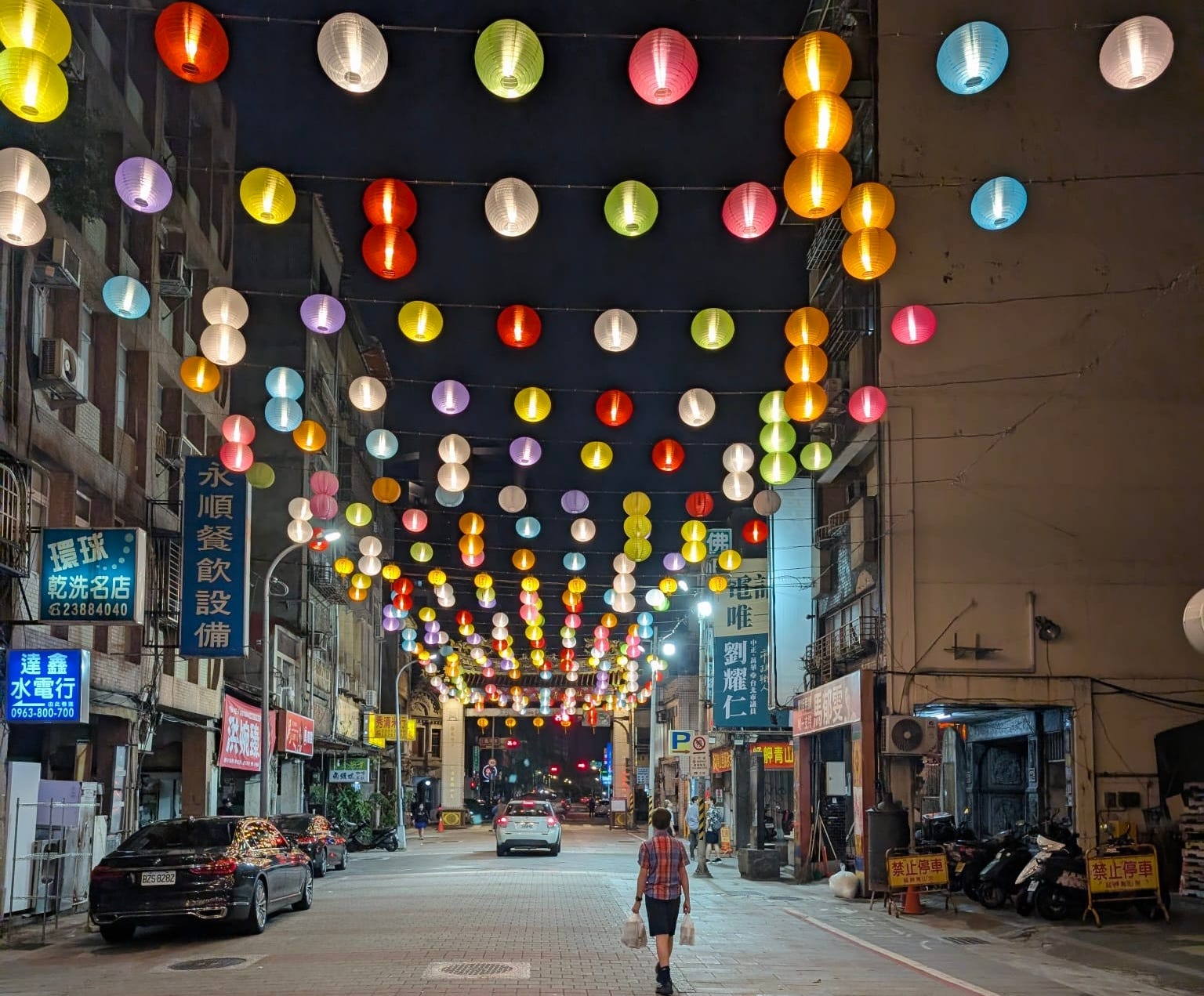
A friend once perfectly described Taiwan as a time capsule where all the religions, traditions, colour, and vibrancy that the Cultural Revolution wiped out in China are preserved — all condensed onto one tiny, lush, green volcanic rock.
Add to this intoxicating mix the Taiwanese people, whom I am convinced are the most welcoming and generous on earth.
Upon my first arrival, it felt as though the entire nation adopted me. Lost and confused, the Taiwanese guided me safely through their cities.
Strangers paid for my meals for no reason. Shop owners invited me to sit and share oolong tea. An elderly lady, hearing me cough, bought me a bottle of sticky black Nin Jiom Pei Pa Koa — a remedy I still reach for today. My years in Taiwan were filled with one random act of kindness after another, far too many ever to list.
Moments like that mattered more than I understood at the time. They created a sense of safety — it was as if the Taiwanese wrapped me up and protected me until I was ready to stand on my own.
How different things are for young people today. Instead of protecting their emerging selves, we sacrifice them to an incoherent ideology — rushing them towards irreversible decisions while denying them the time, space, and safety to explore who they might become.
There’s always a risk in returning to a place you once loved. What if it’s changed?
But my beloved Chiayi has not. The people are as warm and generous as I remember.
Scootering through my old streets, I stopped outside the first building I ever lived in and looked up at it for a while, overcome by a wave of nostalgia. A resident, mistaking me for lost, came over to check I was okay. When I explained, he welcomed me into his office, offered me a cold drink, and then invited my whole family to join his for dinner.
In passing, I told a Taiwanese friend I liked her nail varnish. The next time I saw her, she handed me not just the bottle, but ten other colours too.
A shop owner pulled a poster off the wall and gave it to me — refusing payment, of course — just because I’d admired it.
This is the Chiayi way.
Ever-Shifting Kaleidoscopes
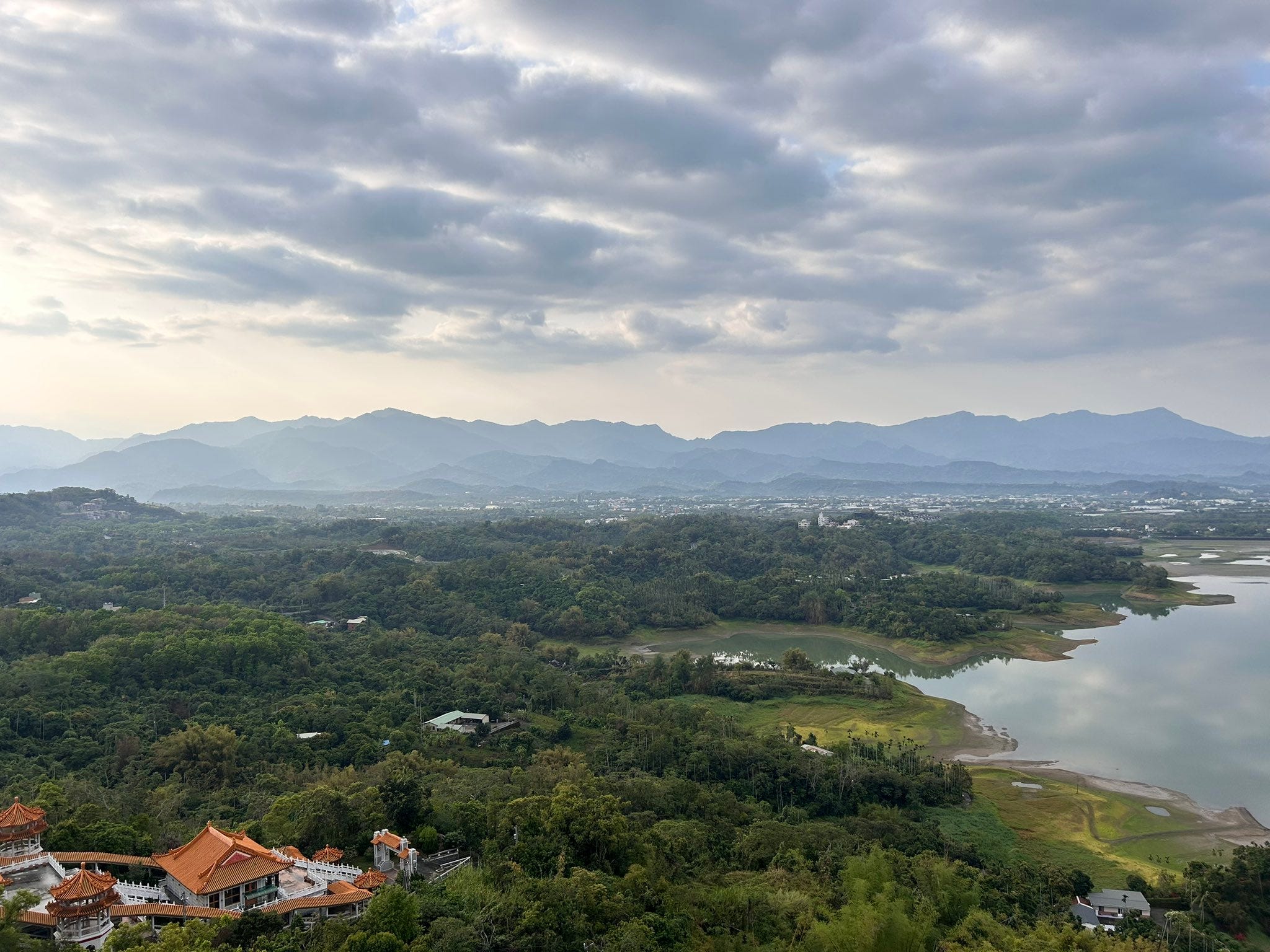
None of us, young or old, has a single, fixed identity waiting to be discovered.
Dr Stephen Levine, one of the wisest human beings I’ve ever had the privilege to meet, describes people as mosaics — a rich complexity of thoughts, desires, and feelings that make up the kaleidoscope of our identities.
As we age and mature, our kaleidoscope turns — our mosaics are ever-changing.
The Taiwanese section of my mosaic shines bright and vibrant. It is only one part, yet a vital one — woven deeply into the person I have become. Still, the whole mosaic is unfinished. And it always will be, just as yours always will be too.
Three versions of me have now flown in over the Taipei mountains at sunrise. The last arrived with a full life I could never have pictured at 22 — one I would never have had if I hadn’t swallowed my fear and taken that chance on Taiwan.
This time, my children stood looking up in awe at the Chiang Kai-shek Memorial beside me. Adolescents with their whole lives ahead of them. What a crime it would be to steal the unknowns that await them.
In an era where so many young people are sold the lie that their identities are fixed, and encouraged to medicalise in ways that cannot be undone, we need to remember the beautiful unpredictability of life.
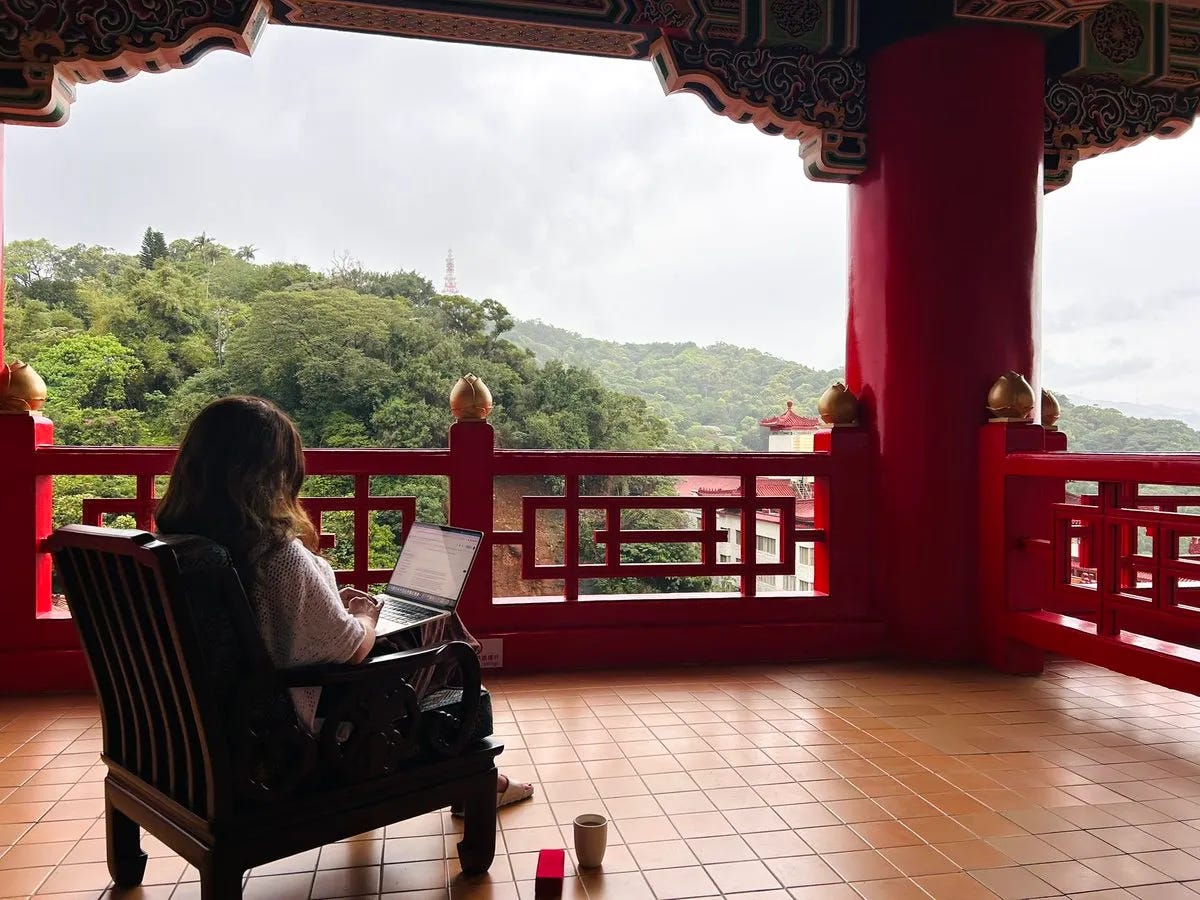
And for me, age has washed away all those silly insecurities. I now enter social gatherings with ease; I’ve finally accepted all my flaws and imperfections, and I can stand on a podium and speak without trembling in fear.
Things I once thought impossible are now effortless.
I am grateful that I was allowed to grow into this life slowly, in the warm, nurturing embrace of this beautiful island. My future remained open long enough for me to discover who I could truly become. Every young person deserves nothing less.
Mia: "Adolescents with their whole lives ahead of them. What a crime it would be to steal the unknowns that await them."
Such a perfectly modest but complete way to tie your life story in to your life's work. Keep being you, Mia.
That was such a wonderful story Mia and "to be continued" of course. What a lovely wise old woman you're going to be one day!